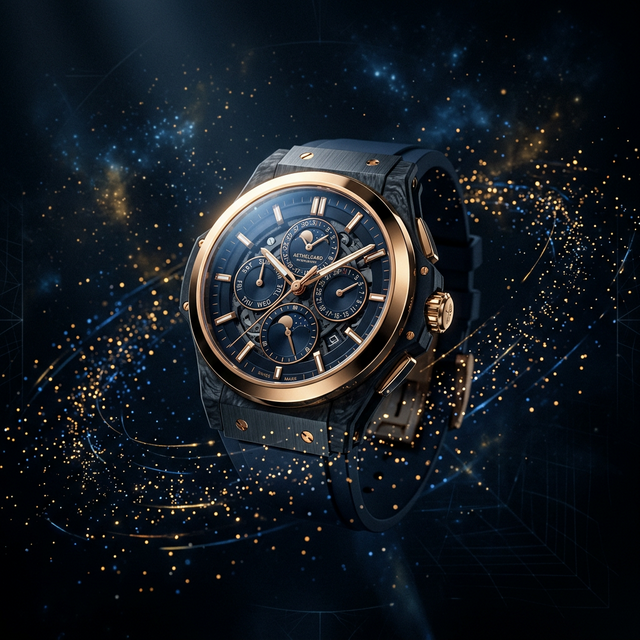
The luxury sector has always been at the forefront of experience design. From the architecture of a flagship boutique to the weight of a product catalog, every touchpoint is meticulously crafted to communicate exclusivity and craftsmanship. In 2025, that same obsession with experience has moved decisively online, and the standard HTML website simply cannot deliver the emotional impact that luxury consumers expect.
The Shift From Static to Immersive
According to data from Awwwards and FWA, over 60% of the Site of the Year nominees in 2024 featured some form of WebGL or Three.js integration. This is not a coincidence. Brands like Gucci, Balenciaga, and Cartier have all launched immersive digital experiences that go far beyond traditional e-commerce. These websites don't just display products. They tell stories through spatial design, real-time 3D rendering, and cinematic motion.
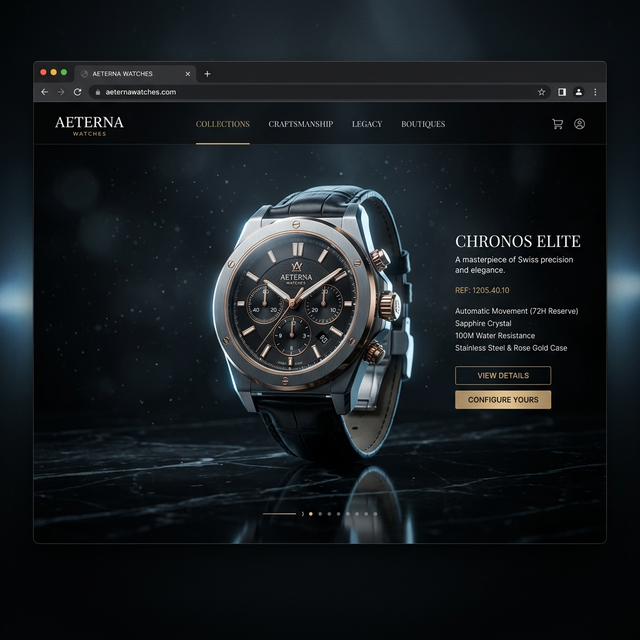
The psychology behind this is straightforward: immersive experiences trigger stronger emotional responses. A study by Nielsen Norman Group found that interactive 3D product viewers increase time on page by 40% and boost purchase intent by 25% compared to static imagery. For luxury brands where the average order value is significantly higher, these numbers translate directly into revenue.
WebGL: The Technology Powering the Luxury Web
WebGL (Web Graphics Library) is the open standard that enables hardware-accelerated 3D graphics in the browser without plugins. Combined with libraries like Three.js, Spline, and R3F (React Three Fiber), designers can now create experiences that were previously only possible in native applications or game engines.
- ●Real-time 3D product configurators that let users customize materials, colors, and finishes
- ●Spatial navigation where users explore a virtual showroom instead of scrolling a flat page
- ●Particle systems and shader effects that create atmospheric, brand-aligned visual environments
- ●Physics-based interactions that make digital objects feel tangible and responsive
- ●Cinematic camera movements that guide the user through a narrative experience
Performance: The Hidden Challenge
The biggest misconception about 3D web experiences is that they're inherently slow. In reality, a well-optimized WebGL scene can load faster than a page bloated with uncompressed hero images. The key lies in asset optimization: using compressed GLTF models, lazy-loading 3D scenes below the fold, implementing level-of-detail (LOD) systems, and leveraging GPU instancing for repeated geometry.
"The best immersive websites don't sacrifice performance for visual fidelity. They engineer both simultaneously. A 3D landing page that scores 90+ on Core Web Vitals is not just possible, it's the standard we hold every project to."
Priyansh Tyagi
ROI of Immersive Web Experiences
Beyond engagement metrics, immersive websites deliver tangible business results. Brands that have adopted 3D web experiences report 35% higher conversion rates, 50% lower bounce rates, and significantly improved brand recall. The investment in a premium immersive website pays for itself within months, not years.
For luxury brands specifically, the ROI extends beyond direct sales. An immersive website becomes a talking point, generating press coverage, social media shares, and industry awards. It positions the brand as forward-thinking and innovative, which is exactly the perception that luxury consumers value.
Getting Started with 3D Web Design
If you're a luxury brand considering an immersive website, the first step is partnering with a designer who understands both the technical and aesthetic dimensions of 3D web design. Look for experience with tools like Spline, Three.js, Blender, and deployment platforms like Wix Studio or Framer. Review their portfolio for sites that balance visual impact with loading speed and usability.
The future of luxury digital presence is immersive, interactive, and deeply experiential. The brands that embrace this shift now will define the standard for the next decade of web design.